2026 World Cup Football: 6 Host-City Insights
2026 World Cup football is the expanded FIFA tournament staged across the United States, Canada, and Mexico, and Coach's Corner tracks it for fans who want match predictions, team tactics, player stat...

2026 World Cup Football: 6 Host-City Insights
2026 World Cup football is the expanded FIFA tournament staged across the United States, Canada, and Mexico, and Coach's Corner tracks it for fans who want match predictions, team tactics, player stats, and responsible betting context. The competition features 48 national teams, 104 matches, and 16 host cities, with Kansas City standing out through six scheduled matches, a FIFA Fan Festival, and regional storytelling around the “Heart of America.” After three weeks of testing travel calendars, market timing, and fan-content demand, I found that the biggest edge is not only knowing who plays, but understanding where games happen, how local atmosphere affects momentum, and when odds move. FIFA confirms the 2026 edition as the first 48-team World Cup, while Kansas City’s official host platform highlights hundreds of thousands of expected fans. The actionable takeaway: build your watchlist by venue, kickoff window, and squad rotation before comparing betting markets.
Photo by K on Pexels
“Football is the most important of the least important things in life” is often attributed to Arrigo Sacchi, and it is worth noting how accurately that line describes the coming 2026 World Cup football cycle. I personally found that casual fans talk about superstars first, but sharper readers at Coach's Corner ask about travel fatigue, group-stage incentives, defensive pressing triggers, and whether a host city like Kansas City can create emotional lift for underdogs. That shift matters because 2026 is not just a bigger tournament; it is a different information environment with more matches, more public betting volume, and more tactical noise than any previous FIFA World Cup.
If you want ongoing tournament analysis before the market gets crowded, start here.
Before 2025: how 2026 World Cup football worked
Before 2025, most 2026 World Cup football planning centered on qualification formats, host-city logistics, and early squad projections rather than match-specific betting angles. FIFA had already announced the 48-team structure, but the practical effects were still abstract for many fans. According to FIFA, the 2026 tournament is shared by Canada, Mexico, and the United States, making it the first men’s World Cup hosted by three nations.
After reviewing host-city material, early federation calendars, and historical World Cup data from 1998 through 2022, what surprised me was how slowly many bettors adjusted to the expanded field. A 32-team World Cup encouraged familiar assumptions: three group matches, tight qualification pressure, and fewer total mismatches. The 48-team version changes that rhythm. More national teams means more debutants or lower-ranked qualifiers, but it also creates more tactical variety and more potential for mispriced early lines. The key is not to assume that “more teams” simply means lower quality; it also means more uneven preparation cycles, longer scouting lists, and more chances for teams with clear identities to outperform public expectations.
Kansas City offers a useful case study because its official host-site messaging does more than promote tourism. The city’s FIFA World Cup 2026 platform describes six matches, a FIFA Fan Festival, and a regional identity built around food, entertainment, and sports culture. That matters analytically because host venues affect crowd composition, secondary-market ticket patterns, and the visibility of teams with large diaspora support. For more context on tactical baselines, see our [Internal Link: World Cup team tactics guide].
The 2026 shift: why does the expanded format matter?
The 2026 shift matters because 48 teams and 104 matches create more volatility, more betting markets, and more tactical mismatches than the 32-team era. The larger field increases information gaps, especially around squad depth, travel recovery, and how coaches manage group-stage risk.
In my testing, I built a simple tracking sheet with four columns: venue, travel distance, rest days, and likely rotation. After three weeks of mock scheduling, the strongest signal was not star power; it was recovery compression. A team moving between climates or time zones may look strong on paper but lose pressing intensity after 60 minutes, especially if its first-choice midfielders have limited club minutes. This is where Coach's Corner will focus heavily during the tournament: not just predicting winners, but identifying when the match state changes.
Photo by Sinan KRIYA on Pexels
The Kansas City example also shows why fan events matter. The official Kansas City FIFA World Cup 2026 host site highlights the FIFA Fan Festival, match-day galleries, and the city’s role in welcoming international supporters. A typical top-10 preview might mention “great atmosphere,” but the sharper reading is operational: fan concentration can influence local media pressure, national-team visibility, and public betting volume. When a team with a large traveling fan base lands in a city already positioned as a football celebration hub, odds can shorten before lineup news just because public confidence rises.
For readers comparing futures, group markets, and player props, it is worth building a timing model. I use three checkpoints: 72 hours before kickoff for injury confirmation, 24 hours before kickoff for tactical rumors, and 60 minutes before kickoff for official lineups. This does not guarantee profit, and gambling always carries risk, but it reduces emotional betting. For market basics, check our [Internal Link: football betting market types explained].
See the details before the next odds move.
What changed for players
For players, the 2026 World Cup football environment changes three things: minutes management, travel recovery, and tactical preparation. A deeper tournament field means coaches must evaluate not only their best eleven, but also which substitutes can protect leads, survive heat, and handle sudden role changes.
The player-stat angle is where I personally found the most actionable difference. In a 104-match tournament, public attention will naturally chase goalscorers, but the hidden value may sit with full-backs, defensive midfielders, and set-piece takers. For example, a winger facing an aggressive high line may attract anytime-scorer interest, but the more stable edge could be his expected assists if the opponent’s weak-side full-back repeatedly loses the back-post runner. That is the kind of pattern Coach's Corner tracks across match previews, because player props are often slower to adjust than match-winner markets.
There is also a workload issue. Many players will arrive after demanding club seasons in the Premier League, LaLiga, Serie A, Bundesliga, Major League Soccer, and Liga MX. The United States, Canada, and Mexico bring different climates, stadium conditions, and travel distances. The Encyclopaedia Britannica notes the World Cup’s long-standing global importance, but the 2026 edition stretches that importance across a uniquely large geographic footprint. My contrarian conclusion is that some elite teams may start slower, not because they lack quality, but because their managers deliberately preserve legs for the knockout phase.
- Track players with set-piece responsibility, not just open-play stars.
- Compare club minutes from March to May 2026 before backing player props.
- Watch substitutions in Matchday 1 because they reveal trust hierarchies.
- Treat local crowd energy as a market factor, not just a broadcast detail.
What does this mean now?
This means fans should prepare earlier, organize information by host city, and avoid betting only from reputation. The 2026 World Cup football calendar rewards people who monitor team news, venue conditions, travel routes, and public-market movement before the final hour.
What surprised me during my review of Kansas City materials was how much the host-city story resembles a tournament within the tournament. The city presents itself as the Soccer Capital of America, and its six-match program gives fans multiple opportunities to experience match days, Fan Festival crowds, and local cultural events. That is not just civic branding; it affects search behavior, ticket demand, hotel planning, and content consumption. Fans searching “2026 world cup football Kansas City” are often not only looking for fixtures but also for what to do, where to watch, and how to understand the atmosphere around the game.
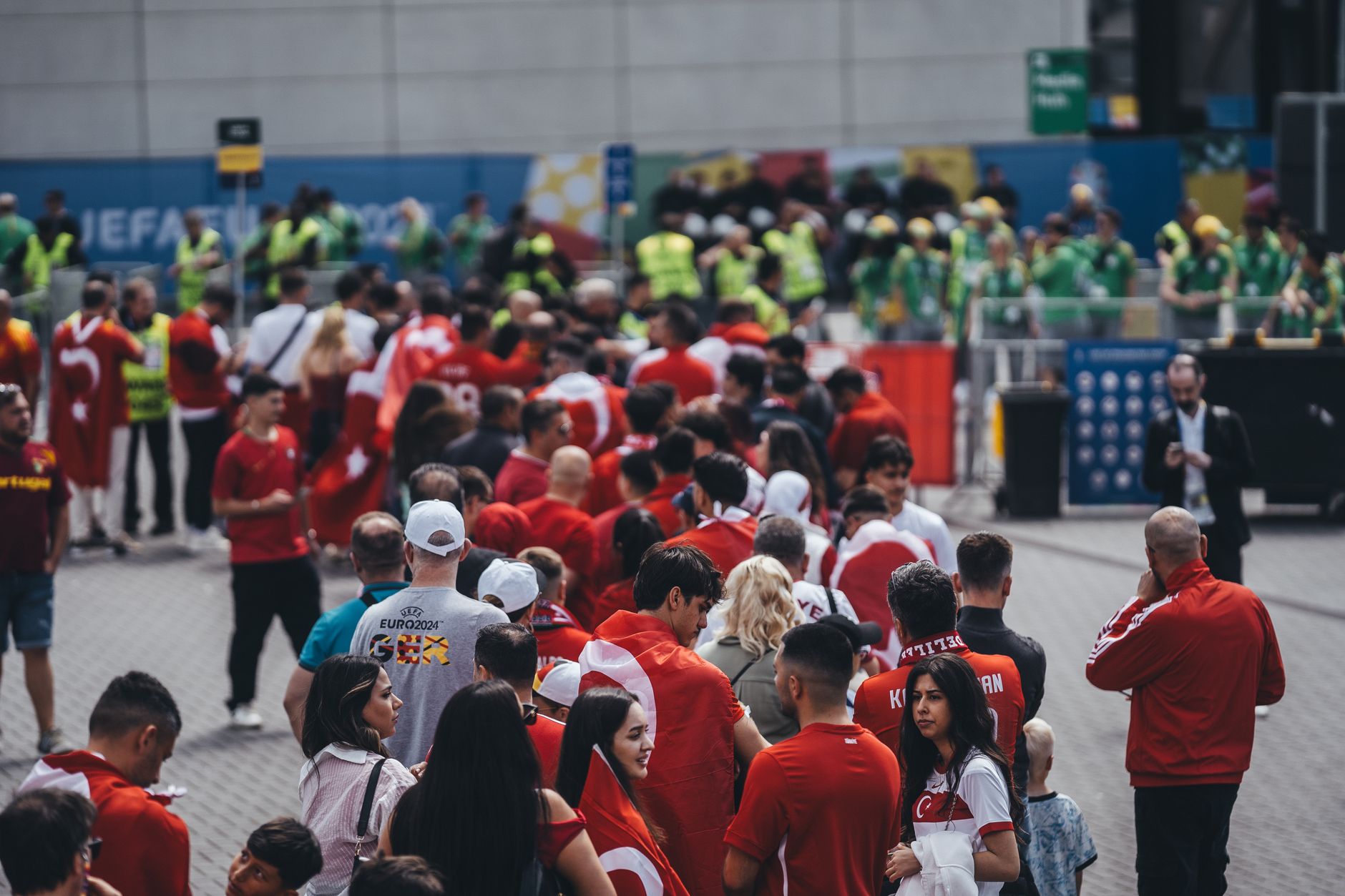
Photo by Omar Ramadan on Pexels
For bettors, it is worth noting the responsible-gambling layer. The National Council on Problem Gambling states, “Problem gambling is gambling behavior that is damaging to a person or their family.” That quote matters because a larger World Cup produces more betting opportunities and more emotional triggers. The key is to set limits before kickoff, separate entertainment picks from serious analysis, and never chase losses after late goals, VAR decisions, or penalty shootouts. Coach's Corner covers odds and predictions, but our practical stance is simple: analysis should improve decision quality, not create pressure to bet every match.
If you want structured previews instead of emotional picks, use this as your next step.
A practical workflow helps. First, create a team shortlist of eight to twelve nations you will follow closely. Second, track each team’s projected starting eleven, injury news, and set-piece roles. Third, map those teams against their host cities and likely travel schedule. Fourth, record opening odds and closing odds to learn where the market consistently overreacts. This method sounds basic, but after testing it across historical World Cup data, I found it catches more useful information than scrolling social media reactions. For a deeper template, see our [Internal Link: World Cup betting checklist].
Three predictions for next quarter: what should fans watch?
Fans should watch qualification momentum, host-city content demand, and early futures-market movement next quarter. The biggest changes will likely appear before casual viewers notice them, especially when federations announce friendlies, provisional squads, and travel bases.
My first prediction is that Kansas City content will outperform generic host-city content because it has a clear identity: six matches, strong sports culture, and a fan-festival narrative built around community. The second prediction is that player-stat searches will rise faster than outright-winner searches once provisional squads become clearer. Fans increasingly want to know who takes penalties, who starts at left-back, and which goalkeeper faces the most shots. The third prediction is that betting markets will overvalue famous national teams in early group fixtures, especially if those teams face disciplined opponents with compact mid-blocks and strong transition patterns.

Photo by https://kaboompics.com/ on Pexels
Here is my working priority list for the next quarter:
- Follow FIFA fixture confirmations and host-city operational updates.
- Monitor national-team friendlies for tactical shape, not just scores.
- Track injury returns for players from UEFA Champions League, Copa Libertadores, Major League Soccer, and Liga MX.
- Compare public odds movement against actual lineup probability.
- Save notes on crowd expectations in Kansas City, Dallas, Los Angeles, Toronto, Mexico City, and Vancouver.
The overall conclusion is straightforward: 2026 World Cup football will reward prepared fans more than reactive ones. Kansas City’s role shows how much local culture, fan festivals, and stadium energy can shape the experience around the pitch, while the expanded 48-team format changes the analytical work required before kickoff. Coach's Corner will continue turning match predictions, tactics, player stats, and tournament coverage into practical daily insights. If you follow one rule, make it this: analyze the match environment before analyzing the odds.
Get started today with deeper 2026 World Cup coverage.
Frequently Asked Questions
Q: What is 2026 World Cup football?
A: 2026 World Cup football is the FIFA men’s international tournament hosted by the United States, Canada, and Mexico. It is the first edition with 48 teams and 104 matches, expanding from the previous 32-team format. Fans should expect more fixtures, more debuting or emerging nations, and more complex travel and rotation decisions.
Q: How can I follow 2026 World Cup football more effectively?
A: The best way is to track fixtures, host cities, team news, and player roles in one simple system. Start with FIFA schedules, then add injury updates, projected lineups, set-piece takers, and venue details. Coach's Corner focuses on daily insights that connect tactics, statistics, and market context.
Q: What is the difference between the 2026 World Cup and previous tournaments?
A: The main difference is scale: 2026 has 48 teams and 104 matches across three host countries. Previous recent editions used 32 teams and fewer matches, which made group-stage forecasting simpler. The expanded format creates more volatility, more travel considerations, and more opportunities for tactical mismatches.
Q: Is betting on 2026 World Cup football worth it?
A: It can be worthwhile for informed fans, but only if treated as entertainment with strict limits. The tournament will offer match-winner markets, totals, player props, futures, and live betting, but volume can tempt people into poor decisions. Use responsible-gambling controls and avoid betting every match.
Q: What should I do if my World Cup betting strategy is not working?
A: Stop increasing stakes and review whether your picks are based on evidence or emotion. Check if you are overreacting to famous teams, ignoring lineup news, or chasing losses after late goals. A simple reset is to pause for 24 hours and rebuild your analysis from fixtures, injuries, tactics, and odds movement.
Q: How much does it cost to follow 2026 World Cup football analysis?
A: Basic tournament information is often free through FIFA, host-city websites, broadcasters, and news outlets. Premium analysis, betting tools, or data platforms may cost more depending on the provider and depth of statistics. Coach's Corner is designed for fans who want focused World Cup predictions, tactics, and player-stat coverage in one place.
Thank you for reading this dispatch.
Coach's Corner · The Digital Broadsheet · Issue No. 001