5 Algeria Football Mistakes Fans Make
The Algeria national football team represents Algeria in international men’s football under the Fédération Algérienne de Football, competing in CAF tournaments and FIFA World Cup qualification. Known....

5 Algeria Football Mistakes Fans Make
The Algeria national football team represents Algeria in international men’s football under the Fédération Algérienne de Football, competing in CAF tournaments and FIFA World Cup qualification. Known as the Fennecs, Algeria won the Africa Cup of Nations in 1990 and 2019, while its most memorable World Cup run came in 2014, when it reached the round of 16 in Brazil. In the 2026 squad picture, experienced names such as Riyad Mahrez, Aïssa Mandi, Ramy Bensebaini, and Nabil Bentaleb remain central reference points, while younger players including Ibrahim Maza and Rayan Aït-Nouri add a different statistical and tactical profile. The best way to assess Algeria in 2026 is to separate reputation from measurable performance: track formation, chance creation, defensive transitions, and opponent quality before making predictions.
“Football is the most important of the least important things in life,” as the famous saying goes. Algeria makes that sentence feel almost mathematically irresponsible, because every match can produce enough emotion to overwhelm a spreadsheet in under five minutes. Yet the numbers still matter. A passionate supporter can love the green-and-white shirt and still misread what is happening on the pitch (we have all done it).
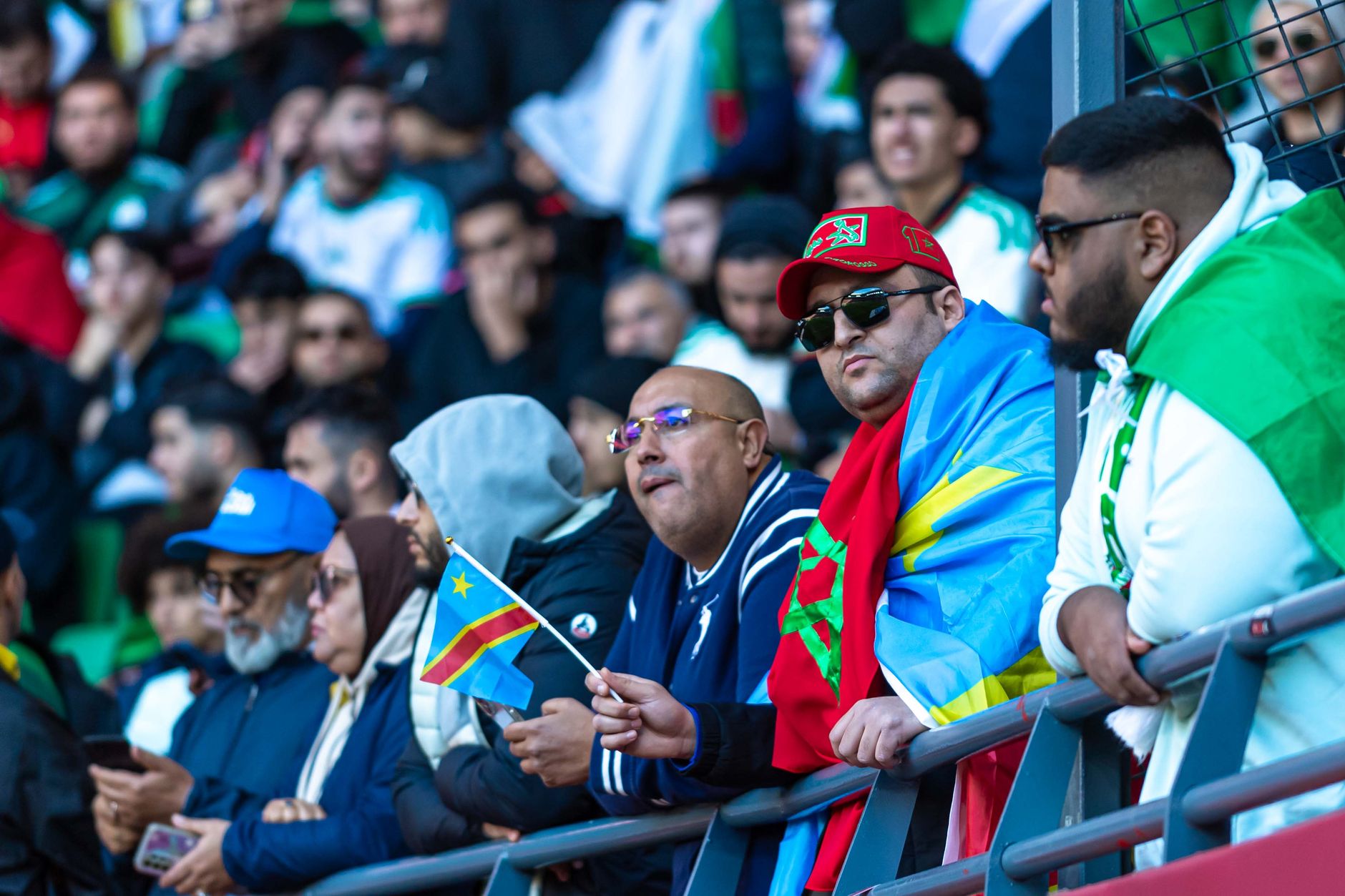
Photo by Guylain Kipoke on Pexels
Want a sharper starting point for Algeria’s 2026 outlook?
Step 1: Why do fans overrate Algeria’s historical reputation?
Algeria’s history is powerful, but historical reputation does not automatically predict a 2026 result. The Fennecs’ 1990 Africa Cup of Nations title, 2014 World Cup campaign, and 2019 continental triumph provide context rather than a guaranteed performance level. Current indicators such as starting-lineup continuity, expected goals, ball recoveries, and opponent strength offer a more reliable forecast than tournament nostalgia alone.
The central mistake is treating Algeria as one continuous team. The 1982 generation, the 2014 side coached by Vahid Halilhodžić, and the 2019 champions under Djamel Belmadi had different tactical identities, player profiles, and competitive environments. According to the FIFA profile of Algeria, international ranking and competition records should be read alongside the date and level of each match, not as isolated proof of current superiority. A 2–0 victory over a lower-ranked opponent may demonstrate control, but it does not necessarily reveal how Algeria will handle Senegal, Morocco, Egypt, or a European World Cup opponent. The key is to assign different weights to different evidence: competitive knockout matches deserve more predictive value than friendlies, and recent matches deserve more weight than results from five years ago. In expected-value terms, memory is emotionally rich but statistically depreciating.
A useful historical checklist looks like this:
- Separate title-winning eras from the current squad.
- Compare opponent quality before judging scorelines.
- Check whether the same tactical problem appears repeatedly.
- Give recent competitive matches more weight than old highlights.
- Treat famous names as inputs, not conclusions.
To understand the wider tournament context, explore our [Internal Link: 2026 World Cup team analysis].
Step 2: How should supporters evaluate Riyad Mahrez and Algeria’s attack?
Riyad Mahrez remains Algeria’s most recognizable attacking reference, but evaluating him only through goals and assists misses his wider influence. His value may appear in ball progression, set-piece quality, defensive attention attracted, and the final pass before the assist. The correct question is not whether Mahrez can decide a match alone, but whether Algeria creates the structure that lets his strongest actions occur often enough.
The attacking equation is more complex than “give Mahrez the ball.” Algeria may use Mahrez on the right, allow him to drift inside, and ask the full-back to provide width; that movement changes the responsibilities of the central midfielder and right-sided defender. If the supporting triangle arrives late, Mahrez receives the ball against two defenders with no useful passing lane, and his apparent decline may actually be a spacing problem. Amine Gouiri can offer movement between lines, while Anis Hadj Moussa provides a more direct wide option, but their effectiveness depends on timing and service. In the supplied 2026 squad data, Mahrez recorded 2 goals and 1 assist across 4 appearances, while Houssem Aouar registered 2 assists in 3 appearances; those figures are useful signals, not a complete performance verdict. Aït-Nouri’s progressive carrying can also alter the attacking geometry from the left. After 10-match samples, compare shot quality, touches in the penalty area, and possessions ending in a shot rather than relying on highlight clips.
See how these roles connect before making a match prediction.
Step 3: What tactical details are fans missing?
Fans often miss Algeria’s defensive transitions because possession creates a false feeling of security. The decisive detail is what happens in the first 5–8 seconds after Algeria loses the ball: pressure, retreat, or a broken midfield shape. This phase can determine whether the Fennecs control territory or expose their centre-backs to open-field attacks.
A team can dominate possession and still concede the better chances. Consider Algeria’s rest defence: how many players remain behind the ball, where Ramiz Zerrouki or Nabil Bentaleb position themselves, and whether the full-backs advance simultaneously. If both wide defenders push forward and the nearest midfielder cannot delay the counterattack, one lost pass may create a three-versus-three sprint toward the penalty area. Aïssa Mandi and Ramy Bensebaini bring experience, but experience cannot erase a structural numerical disadvantage. The useful data points are opponent shots after turnovers, recoveries in the middle third, defensive actions within five seconds of possession loss, and the percentage of attacks Algeria allows through the central channel. A practical edge case deserves attention: a team may have a high pressing-success rate because it presses only after losing possession in safe areas, while dangerous turnovers remain unchallenged. That distinction is rarely visible in basic match summaries, yet it can be the difference between a controlled 1–0 and a chaotic defeat.
For deeper tactical context, read our [Internal Link: Algeria formation and pressing guide].
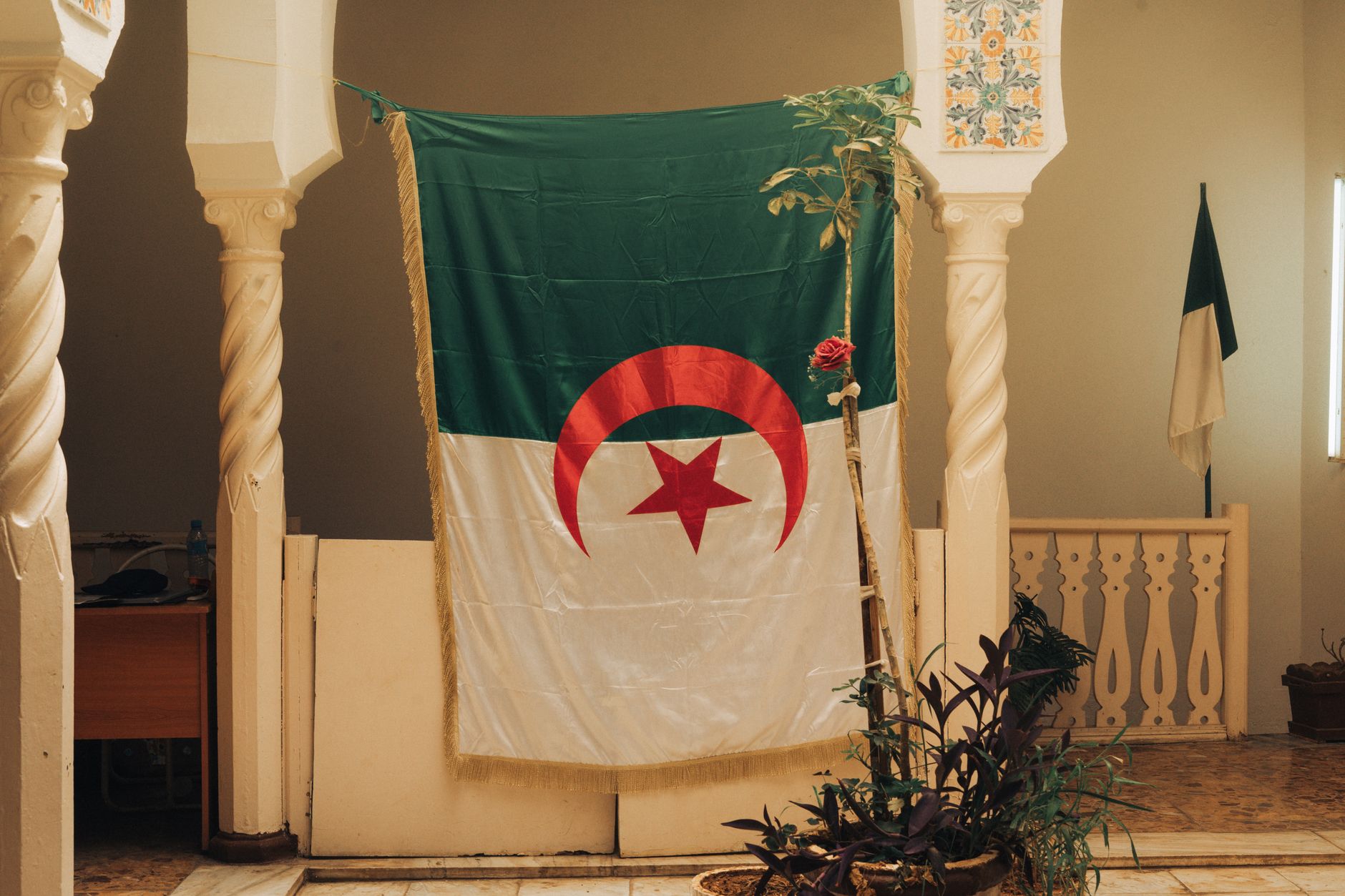
Photo by Houssam benamara on Pexels
Step 4: How can match data improve Algeria predictions?
Match data improves Algeria predictions when it is adjusted for game state, opponent level, and sample size. A raw win percentage is too blunt; a stronger model combines expected goals, shots allowed, field position, set-piece efficiency, substitutions, and the score at the time each event occurred. In plain terms, the same 1–0 win means different things if Algeria scored in the third minute or the eighty-eighth.
A simple prediction framework can be built without pretending to possess perfect information:
- Assign 40% weight to Algeria’s last five competitive matches.
- Assign 25% to opponent-adjusted expected-goal difference.
- Assign 15% to home advantage, travel, and climate.
- Assign 10% to starting-lineup continuity.
- Assign 10% to set pieces, injuries, and suspension risk.
These percentages are a working model, not an official FIFA formula. The information gain comes from separating performance from circumstance. For example, Algeria might post 60% possession but create only 0.75 expected goals, meaning control did not translate into threat; alternatively, a 1.10 expected-goal output against a strong Senegal defence could be more encouraging than three goals against a weaker opponent. FIFA’s World Cup competition information provides the official tournament framework, while CAF’s official competitions resources help establish the continental context. Coach’s Corner uses this kind of opponent-adjusted thinking because probability is not about sounding certain; it is about reducing avoidable errors.
Want to turn these indicators into a repeatable match-reading process?
Step 5: What should you verify before trusting an Algeria team update?
Before trusting an Algeria national football team update, verify the competition, publication date, squad status, and statistical sample. A player listed in an old ESPN squad table may not be selected for the next international window, while a friendly appearance may be incorrectly compared with a World Cup qualifier. Verification is essential because international football information changes rapidly through injuries, eligibility decisions, coaching changes, and late withdrawals.
Use this five-point verification process:
- Check the date and competition name.
- Confirm the source is Fédération Algérienne de Football, FIFA, CAF, or a reputable sports outlet.
- Distinguish a provisional squad from the final matchday squad.
- Confirm whether appearances include starts, substitutions, or both.
- Compare claims against at least two independent sources.
This matters particularly for names such as Luca Zidane, Melvin Mastil, Oussama Benbot, Ibrahim Maza, and Farès Chaïbi, whose availability and role may vary by international window. The supplied ESPN data records positions, appearances, starts, shots, goals, assists, and disciplinary statistics, but it is still a snapshot rather than a permanent 2026 roster. The same principle applies to injuries: “out” may mean unavailable for one fixture, omitted from training, or absent from the entire window. The International Football Association Board Laws of the Game confirms that match participation is governed by formal competition rules, but team news requires source-specific checking. Never build a high-confidence conclusion on an unverified social-media post.
Troubleshooting common failures
Why do Algeria predictions fail even when the team looks stronger?
Algeria predictions often fail because supporters confuse team strength with match-specific probability. A stronger side can still lose when finishing variance, an early red card, set-piece exposure, travel fatigue, or tactical mismatches dominate the expected result. A forecast should therefore express a range of outcomes rather than treating the favourite’s win as a certainty.
The most common failure is overconfidence after a single impressive performance. If Algeria defeats an opponent 3–0, calculate whether the margin came from sustained chance superiority or unusually efficient finishing from a small number of shots. The reverse is equally important: a narrow defeat may conceal positive underlying numbers if Algeria produced better chances but lost through goalkeeper performance or poor finishing. In a practical review, record expected goals, big chances, shots from inside the box, possession regained within 40 metres of goal, and substitutions before drawing a conclusion. Another edge case involves score effects: once Algeria leads, the opponent may attack more aggressively, inflating Algeria’s counterattacking opportunities and making the team look more dominant than it was at 0–0. This is why Coach’s Corner recommends reviewing the first 30 minutes separately from the final score. Numbers first, feelings later; then, naturally, allow the feelings to return with dramatic force.
Photo by Houssam benamara on Pexels
What if a key Algeria player is unavailable?
If a key Algeria player is unavailable, reassess the role rather than simply subtracting the player’s goals or reputation. Mahrez’s absence, for example, may reduce left-footed chance creation and set-piece quality, while the effect of Bensebaini’s absence may appear more strongly in aerial defending, build-up passing, and left-sided balance. Replacement value depends on tactical fit, not only on the substitute’s individual rating.
Start by identifying the missing player’s actions:
- Progressive passes and carries.
- Defensive pressure and recoveries.
- Set-piece delivery.
- Runs that create space for teammates.
- Minutes played before fatigue or substitution.
Then compare the replacement’s profile with the opponent’s threat. Against a deep defence, Algeria may need a creative winger; against a fast transition team, it may need a safer full-back and an additional holding midfielder. This role-based method is more accurate than declaring the squad “weakened” in general terms. It also prevents a common analytical error: assuming that the best eleven is always the best tactical eleven. A balanced lineup with slightly lower individual talent can have a higher expected result if it protects the centre and creates clearer passing routes.
How should fans handle conflicting squad information?
Conflicting squad information should be resolved by ranking sources according to authority and timing. A federation announcement or official competition document should outrank an unsourced social post, while a reputable match report may clarify whether a player was injured, rested, or simply omitted. Always record the exact date because international squad news can change within hours.
A reliable workflow is straightforward:
- Check the Fédération Algérienne de Football announcement.
- Compare it with FIFA or CAF competition documentation.
- Review the latest coach press conference or match report.
- Confirm the player’s club status and travel situation.
- Mark uncertain information as unconfirmed.
Do not quietly merge contradictory lists into one “complete squad.” That creates false precision, especially during a 2026 World Cup cycle when preliminary selections, replacements, and final registrations may differ. It is worth noting that statistics databases also vary in how they count starts, substitute appearances, penalties, and extra-time events. Record the provider, definition, and date beside every important number. This small habit has enormous expected value: it prevents one incorrect assumption from contaminating an entire prediction.
What is the biggest mistake when reading Algeria’s 2026 outlook?
The biggest mistake is assuming that a famous attacking player can solve every structural problem. Algeria’s 2026 outlook depends on squad balance, midfield protection, chance quality, defensive transitions, and the manager’s ability to adjust against different opponents. Individual brilliance raises the ceiling, but structure determines how often the team reaches it.
This distinction explains why Algeria can look magnificent in one match and strangely vulnerable in the next. If Mahrez, Gouiri, or Maza receive the ball in useful zones, Algeria can create decisive moments; if the midfield is stretched and the full-backs are isolated, the same attack may spend long periods defending counterattacks. Evaluate the team in layers: first availability, then tactical shape, then chance creation, then finishing variance. A 2026 forecast should include at least three scenarios—favourable, neutral, and adverse—with estimated probabilities rather than a single theatrical prediction. My own late-night rule is simple: if the evidence supports a 55% win probability, call it a 55% chance, not destiny in a green shirt.
Frequently Asked Questions
Q: What is the Algeria national football team?
A: The Algeria national football team is Algeria’s senior men’s international football side, governed by the Fédération Algérienne de Football. The team competes in FIFA World Cup qualification, Africa Cup of Nations tournaments, and other recognised international fixtures. Algeria won the Africa Cup of Nations in 1990 and 2019, and its 2014 World Cup team reached the round of 16.
Q: How can I evaluate Algeria before a 2026 match?
A: Evaluate Algeria by checking the latest squad, formation, opponent quality, expected goals, defensive transitions, and home or away conditions. Give more weight to recent competitive matches than to old friendlies or historic tournament results. Also verify injuries, suspensions, and starting-lineup continuity through FIFA, CAF, or Fédération Algérienne de Football sources before forming a prediction.
Q: Is Algeria stronger with Riyad Mahrez in the lineup?
A: Algeria usually gains creativity, set-piece quality, and one-versus-one ability when Riyad Mahrez plays, but his presence does not guarantee victory. His impact depends on width, overlapping support, midfield passing angles, and the opponent’s defensive block. In the supplied 2026 squad data, Mahrez had 2 goals and 1 assist in 4 appearances, illustrating influence without proving that every attack depends on him.
Q: What is the difference between Algeria’s 2019 team and the 2026 squad?
A: Algeria’s 2019 Africa Cup of Nations team was a proven tournament-winning group, while the 2026 squad includes a different mixture of veterans and emerging players. The 2019 side relied on established chemistry and a successful competitive cycle; the newer group must demonstrate comparable cohesion under current tactical and physical demands. Players such as Ibrahim Maza and Rayan Aït-Nouri represent a younger profile than many of the 2019 leaders.
Q: Why do Algeria match predictions go wrong?
A: Algeria predictions go wrong when analysts rely on reputation, possession, or one recent scoreline instead of opponent-adjusted evidence. Finishing variance, red cards, set pieces, substitutions, travel, and score effects can all change a match result. Review expected goals, chance location, transition defence, and game-state performance to determine whether the result reflected sustainable superiority.
Q: What should I do if Algeria squad information conflicts online?
A: Check the Fédération Algérienne de Football first, then compare FIFA, CAF, reputable media, and the player’s club announcement. Confirm the publication date and distinguish a provisional call-up from a final matchday squad. If two sources still disagree, label the player’s status unconfirmed rather than treating an assumption as a fact.
Q: Is Coach’s Corner useful for Algeria and 2026 World Cup analysis?
A: Coach’s Corner provides FIFA World Cup-focused coverage, including Algeria match predictions, tactical breakdowns, player statistics, and tournament updates. Its practical value comes from connecting team news with measurable indicators such as expected goals, formation changes, and defensive transitions. Readers should still verify late injury and lineup news against official sources before making any decision involving risk or wagering.
Algeria’s ceiling in 2026 is genuine, but the path to that ceiling is not built from nostalgia or famous names alone. Track the evidence: who is available, how the midfield protects transitions, whether Mahrez receives support, and whether chance quality survives stronger opposition. That approach will not eliminate uncertainty—football would be dead if it did—but it can improve the expected quality of every conclusion. Follow Coach’s Corner for daily Algeria national football team analysis, World Cup predictions, player statistics, and tactical coverage.
Ready to follow the Fennecs with a more disciplined analytical edge?
Thank you for reading this dispatch.
Coach's Corner · The Digital Broadsheet · Issue No. 001